

Alpine Buick GMC South – GMC vs Toyota for Mountain-Grade Braking and Camera-Assisted Trailering near Castle Rock, CO
Living near Castle Rock means quick elevation changes, gusty Palmer Divide winds, and frequent weekend escapes that involve trailers— from pop-up campers bound for Chatfield or Eleven Mile to utility trailers loaded for projects in Founders Village. At Alpine Buick GMC South, we meet a lot of shoppers choosing between GMC and Toyota for trucks and SUVs that can handle those downhill grades and tight trailhead turnarounds. This blog compares both brands with a specific lens on mountain-grade braking and camera-assisted trailering—two confidence boosters that really matter on Monument Hill, SH-67, and the winding approaches into Rampart Range.
Both brands build capable, durable vehicles. Toyota pickups and SUVs have earned a reputation for reliability, and many models offer helpful towing tools. GMC, however, leans hard into integrated trailering technology, altitude-friendly torque, and hands-free highway capability—advantages that pay off every day along I-25 and whenever a slope gets slick or a crosswind tries to push a trailer offline. Here is how those differences show up when you drive.
Let’s start with what you will use on day one—hitching, backing, blind-zone visibility, and downhill control. The right mix of cameras and smart trailering tools can turn stressful minutes into simple, repeatable steps when the weather turns, or the line at the Roxborough boat ramp gets long.
- Camera coverage: Many GMC trucks and SUVs offer HD Surround Vision and, on Sierra 1500 and Sierra Heavy Duty, up to 14 or 15 available camera views, including Transparent Trailer View on properly equipped models. Toyota offers Panoramic View Monitor and trailer guidance on select models, which is helpful, but GMC’s broader camera set can reduce guesswork in tight lots and on angled mountain pull-offs.
- Hitching and backing: GMC Hitch Guidance with Hitch View places the hitch right on the centerline and keeps it there while you back—simple and confidence-inspiring when crosswinds tug at Castle Rock trailheads. Toyota counters with Straight Path Assist and Trailer Backup Guidance on select vehicles, which help maintain a line, though the on-screen aiming and dynamic overlays on GMC models feel especially intuitive for solo hookups.
- Hands-free help: Available Super Cruise® on select GMC vehicles (including certain Sierra 1500, Sierra Heavy Duty, Yukon, and Acadia configurations) can assist with hands-free driving on compatible divided highways and is available to function with trailering on select models. Toyota does not currently offer a comparable hands-free system, which is a meaningful advantage for long I-25 stretches when conditions allow.
- Trailering app and checklists: GMC’s in-vehicle trailering app integrates profiles, predeparture checklists, maintenance reminders, and trailer tire pressure/temperature monitoring on compatible setups. Toyota provides useful tow features, but GMC’s checklists and tire monitoring integration streamline routines for frequent haulers.
- Blind-zone confidence: Trailer Side Blind Zone Alert on select GMC trucks extends side-zone coverage to the length of a compatible trailer—handy for merging near Castle Rock Parkway. Toyota provides Blind Spot Monitor on many models, yet extended trailer-length coverage is a standout GMC advantage.
- Downhill control: Hill Descent Control on many GMC trucks and SUVs assists on loose grades into Pike National Forest, while robust Tow/Haul logic and available engine braking features help manage speed. Toyota’s Downhill Assist Control and Tow/Haul modes are helpful too, but the combination of GMC’s powertrain braking and camera coverage is especially reassuring when grades and traffic mix.
Those features shine because of what sits under the hood. Altitude saps power—roughly 3 percent per 1,000 feet for naturally aspirated engines—so boosted torque and smart gearing matter around Castle Rock and Monument Hill. Here is how both lineups stack up in power delivery and driveline control for the Front Range.
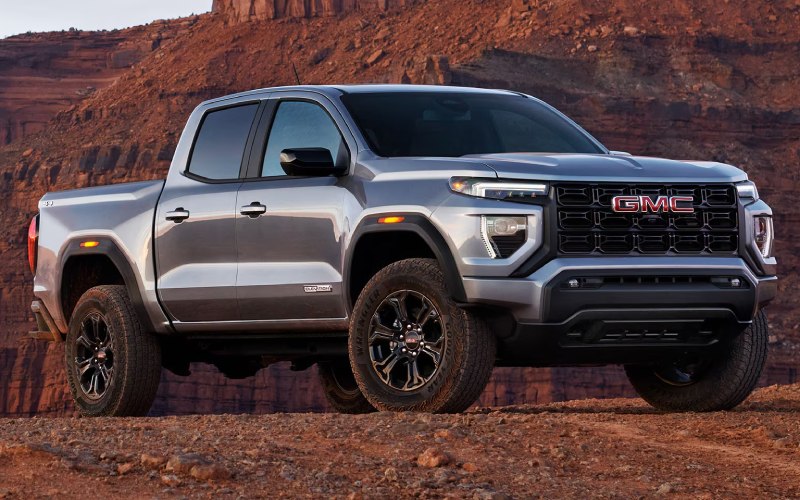
- Altitude-ready torque: GMC offers multiple turbocharged options—like the TurboMax™ engine on select Sierra 1500 and Canyon models—and high-torque alternatives, including the available Duramax 3.0L Turbo-Diesel in certain SUVs and trucks. Toyota increasingly uses turbocharged engines as well, which helps at elevation, but GMC’s breadth across trucks and SUVs provides flexible choices for towing and daily driving.
- Diesel availability: GMC availability of diesel power in select full-size SUVs and HD trucks delivers stout low-end torque and confident braking with a trailer—useful descending Monument Hill in winter. Toyota’s current U.S. SUV line does not offer a diesel; select trucks rely on turbocharged gas or hybrid systems.
- Transmission control: GMC calibrations with Tow/Haul mode and available exhaust or engine braking features on select models help maintain speed without riding the pedal. Toyota’s Tow/Haul logic is solid, but GMC’s combination with robust camera views and trailer length blind-zone support reduces workload.
- 4WD/AWD modes: AutoTrac 2-speed transfer cases with Auto 4WD on many GMC trucks simplify transitions from dry to slick surfaces on Palmer Divide gust days. Toyota’s part-time and full-time 4WD systems are capable, though Auto 4WD convenience on GMC models is a welcome set-and-forget advantage when the weather flips mid-commute.
Technology ease-of-use matters on busy weekday drives, too. If the tow rig doubles as a family shuttle from The Meadows to downtown, infotainment and driver assistance can make the difference between a calm commute and a juggling act.
- Built-in apps: Many GMC vehicles offer Google Built-in with Google Assistant, Google Maps, and Google Play, so voice commands, traffic-aware routing, and app continuity feel natural. Toyota Audio Multimedia is responsive and supports smartphone integration, but the deep Google Built-in integration across GMC SUVs and trucks reduces setup time for multi-driver households.
- Quiet cabins: Denali and Denali Ultimate trims bring premium materials and noise mitigation that take the edge off winter gusts crossing Plum Creek. Toyota’s higher trims are comfortable, yet the calm, upscale ride tuning on many GMC trims stands out during long I-25 stretches.
- Driver-assistance suites: GMC Pro Safety and GMC Pro Safety Plus include features like Automatic Emergency Braking, Lane Keep Assist with Lane Departure Warning, Following Distance Indicator, and IntelliBeam. Toyota Safety Sense brings an equally robust set of standard aids. The difference for Front Range highway runs is GMC’s available Super Cruise®—a meaningful layer of long-haul confidence when conditions are right.
- Parking confidence: HD Surround Vision and available front/rear camera views on GMC SUVs simplify angled downtown parking and tight trailhead pullouts near Dawson Butte. Toyota’s Panoramic View Monitor is effective, though GMC’s higher camera-count options give a more complete picture around longer trailers.
Off the pavement, both brands bring traction tools designed for Colorado’s shoulder season—those sunny-morning, icy-afternoon days. GMC’s off-road oriented trims like AT4 and AT4X pair drive modes with hardware like skid plates, all-terrain tires, and available front cameras to spot ruts. Toyota’s TRD and off-road packages supply similarly serious gear. The camera and downhill-control advantages remain—the exact tools you want when the shoulder is soft, the approach angle is blind, and a crosswind is pushing the trailer.
If you are deciding which brand fits your life near Castle Rock, use this simple framework to match capability with your real routes and routines.
- What you tow: List your trailer types, tongue weights, and typical payload—then match with a GMC that offers the right axle ratio, integrated brake controller, and ProGrade Trailering features for your setup.
- Where you park: If your driveway or storage spot is tight, prioritize GMC models with HD Surround Vision and the highest camera-view count you can option.
- How often you cross Monument Hill: Frequent grade work favors GMC powertrains with abundant low-end torque and available engine/exhaust braking support.
- Who rides with you: Families juggling school runs and ski trips will appreciate quiet Denali cabins and Google Built-in—features that reduce friction during everyday chores.
- Try the tech with your gear: Bring your hitch gear to our store in Colorado Springs and experience hitch alignment, blind-zone alerts, and camera views with a walkaround or test drive.
At Alpine Buick GMC South, we are built on trust, powered by people, and committed to community. Our team understands the Castle Rock commute, the gusts over Monument Hill, and the weekend hauls into Pike National Forest. We will help you explore GMC options—from Canyon and Sierra to Acadia, Terrain, Yukon, and HUMMER EV—so you can see how the camera views, downhill control, and available Super Cruise® fit your routes. When you are ready, visit us at 1313 Motor City Dr in Colorado Springs—just a short drive south on I-25—or give us a call to schedule a tailored test drive.
Bottom line: Toyota builds capable vehicles with helpful tow features, but GMC’s depth in camera-assisted trailering, extended blind-zone coverage for trailers, altitude-ready torque options (including available diesel), and available Super Cruise® create a calmer, more confident drive for Castle Rock conditions. If mountain-grade braking and visibility are your top priorities, a GMC from our showroom is set up to make every mile feel easier—weekday or weekend.
Frequently Asked Questions:
Which GMC models offer Super Cruise® with trailering support?
Super Cruise® is available on select GMC vehicles and is available to function with trailering on properly equipped Sierra 1500, Sierra Heavy Duty, and Yukon models. Our team can confirm availability by trim and equipment for the specific vehicle you want to test.
How do GMC camera views help in Castle Rock crosswinds and on grades?
Multiple available views—front, rear, surround, hitch, and Transparent Trailer View on properly equipped trucks—let you verify trailer angle, lane position, and neighboring traffic at a glance. That reduces corrections when crosswinds hit on Monument Hill or when a downhill curve tightens unexpectedly.
Is a turbocharged gasoline engine or a diesel better for the Front Range?
Both handle elevation well. Turbocharged gas engines, such as the available TurboMax™ on select GMC models, maintain strong torque at altitude. Available diesel options provide even more low-end torque and confident braking support with a trailer. We will help you match powertrain to trailer weight and usage.
Do GMC SUVs have the towing tech I need, or do I need a truck?
Many GMC SUVs include robust towing features like HD Surround Vision, Hitch Guidance, available trailering packages, and Google Built-in for easy navigation to trailheads. For heavier campers or equipment, GMC trucks add higher tow ratings, more camera views, and trailer-length blind-zone alerts.
Can I see HD Surround Vision and Hitch Guidance in action before I buy?
Yes. Visit our Colorado Springs showroom, and we will demonstrate camera views, hitch alignment, and trailering app features. If you have a hitch or specific accessory in mind, bring it along so we can walk through your real setup.
How does Alpine Buick GMC South support service after the sale?
Our Certified Service team uses GM Genuine Parts and ACDelco parts, offers multi-point inspections, and provides maintenance packages that keep your GMC ready for Colorado seasons. We treat neighbors like neighbors—quick, clear, and respectful care every visit.
Request more information
Connect with us


- Alpine Buick GMC South
- Alpine Buick GMC South Service
- Buick and GMC Service
- Buick Dealer
- Buick Enclave
- Buick Encore GX
- Buick Envision
- Buick Envista
- Buick GMC Service
- Buick Service
- Colorado Springs Buick Dealer
- Colorado Springs Buick Service
- Colorado Springs GMC Dealer
- Colorado Springs GMC Service
- Colorado Springs Used Cars
- GMC Acadia
- GMC Canyon
- GMC Dealer
- GMC Sierra 1500
- GMC Sierra 2500 HD
- GMC Sierra 3500 HD
- GMC Terrain
- GMC Trucks
- GMC Yukon
- GMC Yukon XL
- Used Dealer
- Vehicle financing